

In today’s highly competitive business environment, organizations need efficient systems to manage customer relationships, operations, finances, inventory, and workforce productivity. As businesses grow, managing these processes manually or through disconnected software becomes increasingly challenging. This is where Customer Relationship Management (CRM) and Enterprise Resource Planning (ERP) solutions play a crucial role.
By integrating business processes and centralizing data, CRM and ERP systems help organizations improve efficiency, reduce operational costs, and make smarter decisions. In this blog, we’ll explore how CRM and ERP solutions streamline business operations and why businesses are investing in these technologies to accelerate growth.
Understanding CRM and ERP Solutions
What is a CRM System?
A CRM (Customer Relationship Management) system helps businesses manage interactions with customers, prospects, and leads. It centralizes customer data, tracks communication, automates sales processes, and improves customer service.
Key CRM functions include:
- Lead management
- Sales automation
- Customer support tracking
- Marketing automation
- Customer analytics
- Relationship management
What is an ERP System?
An ERP (Enterprise Resource Planning) system integrates core business functions into a single platform. It connects departments such as finance, procurement, inventory, manufacturing, human resources, and supply chain management.
Key ERP functions include:
- Financial management
- Inventory control
- Supply chain management
- Human resource management
- Procurement and purchasing
- Production planning
- Business reporting and analytics
Why Businesses Need CRM and ERP Integration?
Many organizations use separate tools for customer management and operational processes. However, disconnected systems often result in:
- Data duplication
- Communication gaps
- Manual data entry
- Inconsistent reporting
- Reduced productivity
When CRM and ERP systems work together, businesses gain a unified view of customers and operations, enabling seamless collaboration across departments.
Benefits of CRM and ERP Solutions for Business Operations
- Improved Data Accuracy and Centralized Information
One of the biggest challenges businesses face is managing data across multiple systems. CRM and ERP solutions create a centralized database where information is updated in real-time.
Benefits include:
- Elimination of duplicate records
- Consistent business information
- Better visibility across departments
- Reduced human errors
With accurate data, organizations can make faster and more informed decisions.
- Enhanced Customer Relationship Management
Customer satisfaction is a key driver of business success. CRM systems allow businesses to understand customer needs, track interactions, and provide personalized experiences.
Advantages include:
- Faster response times
- Better customer support
- Personalized communication
- Increased customer retention
- Improved sales opportunities
When integrated with ERP, customer service teams can access order history, inventory status, invoices, and delivery information instantly.
- Streamlined Business Processes
ERP systems automate repetitive tasks and standardize workflows across departments.
Examples include:
- Automated invoice generation
- Purchase order processing
- Inventory updates
- Employee payroll management
- Financial reporting
Automation reduces administrative workload and allows employees to focus on strategic activities.
- Increased Operational Efficiency
Manual processes often lead to delays and inefficiencies. CRM and ERP solutions eliminate bottlenecks by automating workflows and enabling real-time collaboration.
Key efficiency improvements include:
- Faster order processing
- Improved inventory management
- Reduced paperwork
- Better resource allocation
- Optimized production schedules
As a result, businesses can operate more efficiently while lowering operational costs.
- Better Sales Performance
CRM systems provide sales teams with complete visibility into customer interactions and sales pipelines.
Benefits for sales teams:
- Lead tracking and nurturing
- Automated follow-ups
- Opportunity management
- Sales forecasting
- Performance analytics
When integrated with ERP, sales representatives can access pricing, inventory levels, and order status without switching between systems.
- Real-Time Reporting and Analytics
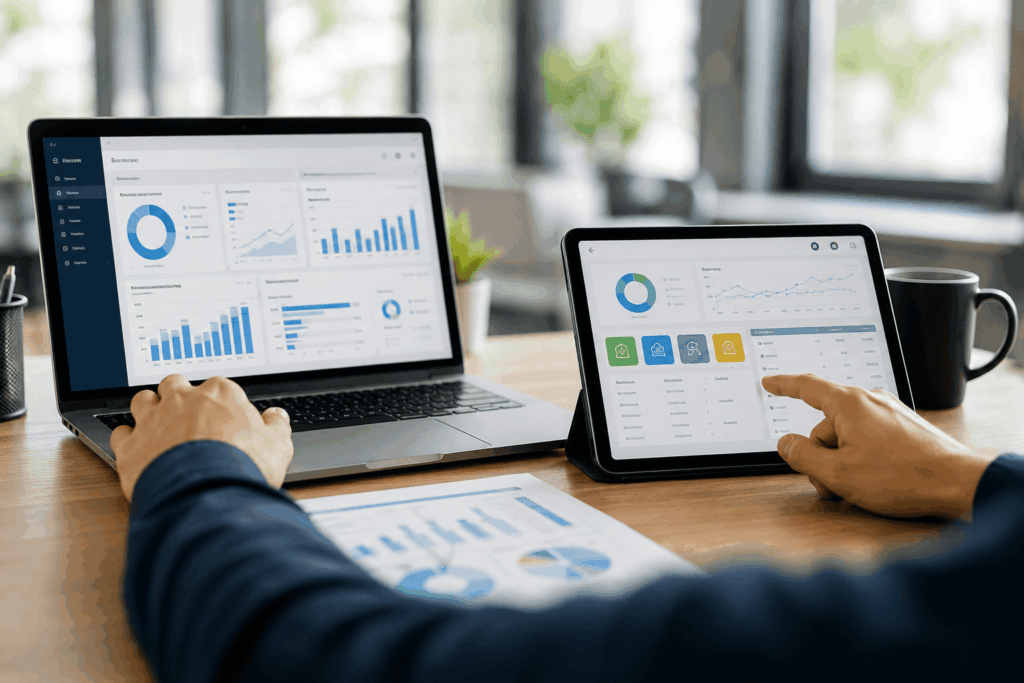
Modern businesses rely on data-driven decision-making. CRM and ERP solutions provide advanced dashboards and reporting tools that deliver real-time insights.
Organizations can monitor:
- Sales performance
- Revenue growth
- Customer behavior
- Inventory levels
- Financial performance
- Employee productivity
These insights help leadership teams identify opportunities, reduce risks, and improve business outcomes.
- Improved Inventory and Supply Chain Management
Inventory mismanagement can result in stock shortages, excess inventory, and revenue loss.
ERP systems help businesses:
- Track inventory in real-time
- Forecast demand accurately
- Optimize procurement
- Manage suppliers effectively
- Reduce inventory carrying costs
By connecting sales data from CRM with inventory information from ERP, businesses can improve forecasting and customer satisfaction.
- Stronger Financial Management
Financial accuracy is essential for sustainable growth. ERP solutions simplify financial operations through automation and centralized reporting.
Features include:
- Budget management
- Accounts payable and receivable
- Tax compliance
- Cash flow monitoring
- Financial forecasting
Organizations gain greater financial transparency and can make strategic investment decisions with confidence.
- Scalability for Growing Businesses
As businesses expand, managing operations becomes increasingly complex. CRM and ERP solutions are designed to scale alongside organizational growth.
Scalability benefits include:
- Support for multiple locations
- Increased transaction volumes
- Expanded product lines
- Growing customer databases
- Additional users and departments
This flexibility ensures long-term operational efficiency and business continuity.
- Enhanced Collaboration Across Departments
Disconnected departments often struggle with communication and information sharing.
CRM and ERP integration improves collaboration between:
- Sales teams
- Customer service departments
- Finance teams
- Operations managers
- Procurement teams
- Executive leadership
Everyone works from the same source of truth, improving productivity and organizational alignment.
Industries That Benefit from CRM and ERP Solutions
Businesses across various industries can leverage CRM and ERP technologies, including:
- a) Manufacturing
- Production planning
- Inventory optimization
- Supply chain visibility
- b) Retail and E-commerce
- Customer management
- Order tracking
- Inventory control
- c) Healthcare
- Patient management
- Resource allocation
- Compliance tracking
- d) Logistics and Transportation
- Fleet management
- Shipment tracking
- Customer communication
- e) Professional Services
- Project management
- Resource planning
- Client relationship management
How Inforow Technologies Helps Businesses Transform Operations?
At Inforow Technologies, we understand that every business has unique operational challenges. Our CRM and ERP solutions are designed to help organizations automate workflows, improve efficiency, and achieve sustainable growth.
Our expertise includes:
- Custom CRM development
- ERP implementation and integration
- Business process automation
- Cloud-based enterprise solutions
- Data analytics and reporting
- Ongoing support and optimization
By leveraging advanced technologies and industry best practices, we help businesses build a connected digital ecosystem that drives productivity and profitability.
Conclusion
CRM and ERP solutions have become essential tools for organizations seeking operational excellence and long-term growth. By centralizing data, automating processes, improving customer relationships, and enabling real-time decision-making, these systems empower businesses to stay competitive in a rapidly evolving marketplace.
Whether you’re looking to enhance customer engagement, streamline operations, or scale your business efficiently, investing in CRM and ERP solutions can deliver measurable results.
Inforow Technologies helps businesses unlock the full potential of CRM and ERP systems through tailored solutions that align with their goals and growth strategies.