


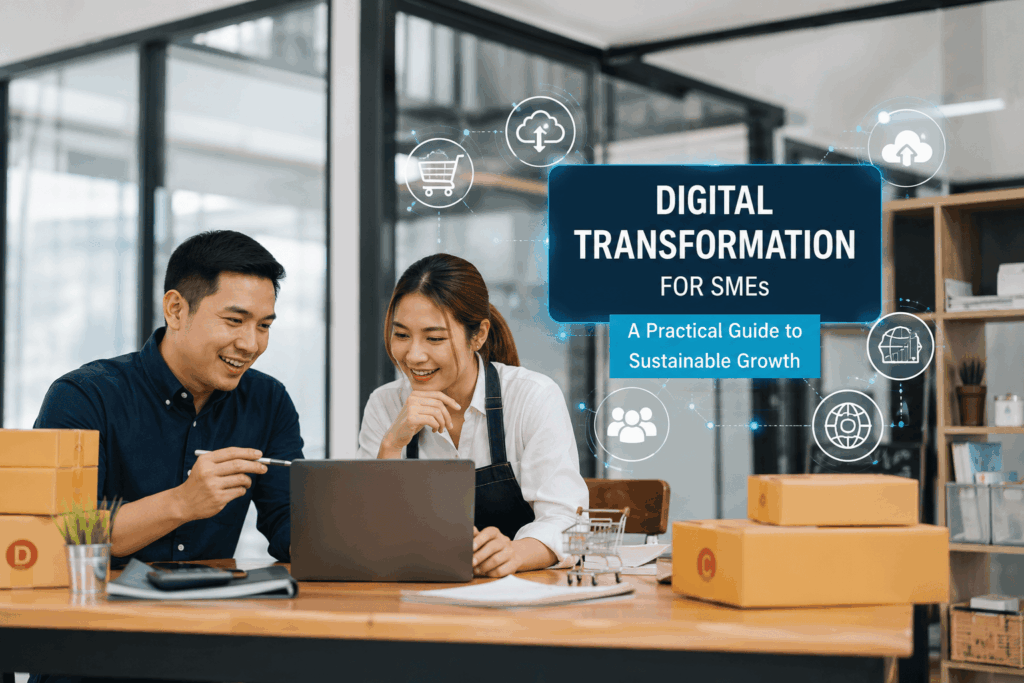
In today’s competitive business landscape, digital transformation is no longer a luxury—it’s a necessity. Small and Medium Enterprises (SMEs) are increasingly adopting digital technologies to improve operational efficiency, enhance customer experiences, and remain competitive in rapidly evolving markets.
However, digital transformation is more than simply purchasing new software or moving to the cloud. It involves rethinking business processes, embracing innovation, and creating a technology-driven culture that supports long-term growth.
At Inforow Technologies, we help SMEs navigate this transformation with scalable, cost-effective, and future-ready digital solutions tailored to their business goals.
What is Digital Transformation?
Digital transformation refers to the integration of digital technologies across all areas of a business to fundamentally improve how it operates and delivers value to customers.
For SMEs, this may include:
- Cloud migration
- Business process automation
- Customer Relationship Management (CRM) implementation
- Enterprise Resource Planning (ERP)
- Data analytics and business intelligence
- AI-powered customer support
- Mobile and web applications
- Cybersecurity enhancements
The objective is simple: work smarter, reduce operational costs, and accelerate business growth.
Why Digital Transformation Matters for SMEs?
Unlike large enterprises, SMEs often operate with limited resources. Digital technologies help maximize productivity without significantly increasing operational expenses.
1. Increased Operational Efficiency
Manual processes consume valuable time and often lead to errors.
Digital tools automate repetitive tasks such as:
- Invoice processing
- Inventory management
- Employee attendance
- Payroll
- Customer follow-ups
- Report generation
Automation allows employees to focus on higher-value activities.
2. Better Customer Experience
Today’s customers expect:
- Faster responses
- Personalized services
- Multiple communication channels
- Seamless online experiences
Digital platforms enable businesses to provide:
- Live chat support
- Customer portals
- Mobile applications
- Self-service options
- Personalized marketing campaigns
Satisfied customers are more likely to become loyal customers.
3. Improved Decision-Making with Data
Modern businesses generate valuable data every day.
Digital transformation enables SMEs to monitor:
- Sales performance
- Customer behavior
- Marketing ROI
- Inventory trends
- Financial performance
- Employee productivity
Real-time dashboards help business leaders make informed decisions rather than relying on assumptions.
4. Cost Reduction
Cloud computing and automation significantly reduce operational costs by minimizing:
- Paperwork
- Manual labor
- Hardware investments
- IT maintenance
- Downtime
Businesses pay only for the resources they actually use.
5. Business Scalability
As businesses grow, manual systems become difficult to manage.
Digital platforms scale effortlessly by supporting:
- More customers
- Larger teams
- Multiple locations
- Increased transactions
- Global operations
This ensures sustainable long-term growth.
Common Digital Transformation Challenges for SMEs
Many SMEs hesitate to begin digital transformation because of perceived obstacles.
Budget Constraints
Many business owners believe digital transformation is expensive.
The reality is that cloud-based solutions offer affordable subscription models that eliminate large upfront investments.
Resistance to Change
Employees may be uncomfortable adopting new technologies.
Successful transformation includes:
- Employee training
- Clear communication
- Leadership support
- Continuous learning
Legacy Systems
Older software may not integrate with modern technologies.
A phased migration strategy minimizes disruption while improving business performance.
Cybersecurity Risks
As businesses become more digital, cybersecurity becomes increasingly important.
Essential measures include:
- Multi-factor authentication
- Data encryption
- Secure cloud infrastructure
- Regular software updates
- Employee security awareness
A Step-by-Step Digital Transformation Strategy
Step 1: Evaluate Current Business Processes
Identify:
- Manual workflows
- Operational bottlenecks
- Customer pain points
- Areas with repetitive tasks
This creates a roadmap for improvement.
Step 2: Define Clear Business Goals
Examples include:
- Increase productivity by 30%
- Reduce operational costs
- Improve customer satisfaction
- Expand into new markets
- Enhance employee collaboration
Technology should support measurable business outcomes.
Step 3: Prioritize High-Impact Projects
Start with projects that deliver quick wins, such as:
- CRM implementation
- Cloud migration
- Website modernization
- Workflow automation
- Digital document management
Early successes build momentum for larger initiatives.
Step 4: Choose the Right Technology Partner
An experienced technology partner understands:
- Industry-specific challenges
- Business processes
- Scalable architecture
- Security best practices
- Integration requirements
The right guidance reduces implementation risks.
Step 5: Train Employees
Technology adoption depends on people.
Provide:
- Hands-on training
- Documentation
- Ongoing support
- Regular feedback sessions
Well-trained employees maximize the value of new systems.
Step 6: Continuously Improve
Digital transformation is an ongoing journey.
Regularly review:
- KPIs
- Customer feedback
- Process performance
- Technology upgrades
Continuous optimization ensures long-term success.
Key Technologies Driving SME Growth
A] Cloud Computing
Cloud solutions provide:
- Flexibility
- Lower infrastructure costs
- Remote accessibility
- Automatic updates
- High availability
B] Artificial Intelligence (AI)
AI helps SMEs through:
- Customer support chatbots
- Predictive analytics
- Sales forecasting
- Document processing
- Personalized marketing
C] Business Automation
Automation improves efficiency across:
- HR
- Finance
- Operations
- Marketing
- Procurement
E] Data Analytics
Business intelligence platforms transform raw data into actionable insights that support strategic decision-making.
F] Mobile Applications
Mobile solutions improve customer engagement while enabling employees to work efficiently from anywhere.
Measuring Digital Transformation Success
Track key performance indicators such as:
- Revenue growth
- Customer retention
- Employee productivity
- Process completion time
- Operational costs
- Customer satisfaction
- Website conversions
- Digital adoption rate
Regular measurement helps ensure continuous improvement.
Why Choose Inforow Technologies?
At Inforow Technologies, we understand that every SME has unique business goals and challenges.
Our digital transformation services include:
- Custom Software Development
- Cloud Solutions
- Business Process Automation
- CRM & ERP Development
- AI & Machine Learning Solutions
- Mobile App Development
- Web Development
- Data Analytics & Business Intelligence
- IT Consulting
- Ongoing Support & Maintenance
We focus on delivering scalable, secure, and cost-effective digital solutions that help businesses innovate, improve efficiency, and achieve sustainable growth.
Final Thoughts
Digital transformation is no longer reserved for large enterprises. SMEs that embrace digital technologies today are better positioned to improve efficiency, strengthen customer relationships, reduce operational costs, and adapt to changing market demands.
The journey begins with a clear strategy, the right technology, and an experienced implementation partner. By investing in digital transformation, SMEs can build resilient operations, unlock new growth opportunities, and create a strong foundation for long-term success.
Whether you’re modernizing existing systems or starting your digital journey from scratch, Inforow Technologies is ready to help you transform your business with innovative, scalable, and future-ready solutions.