


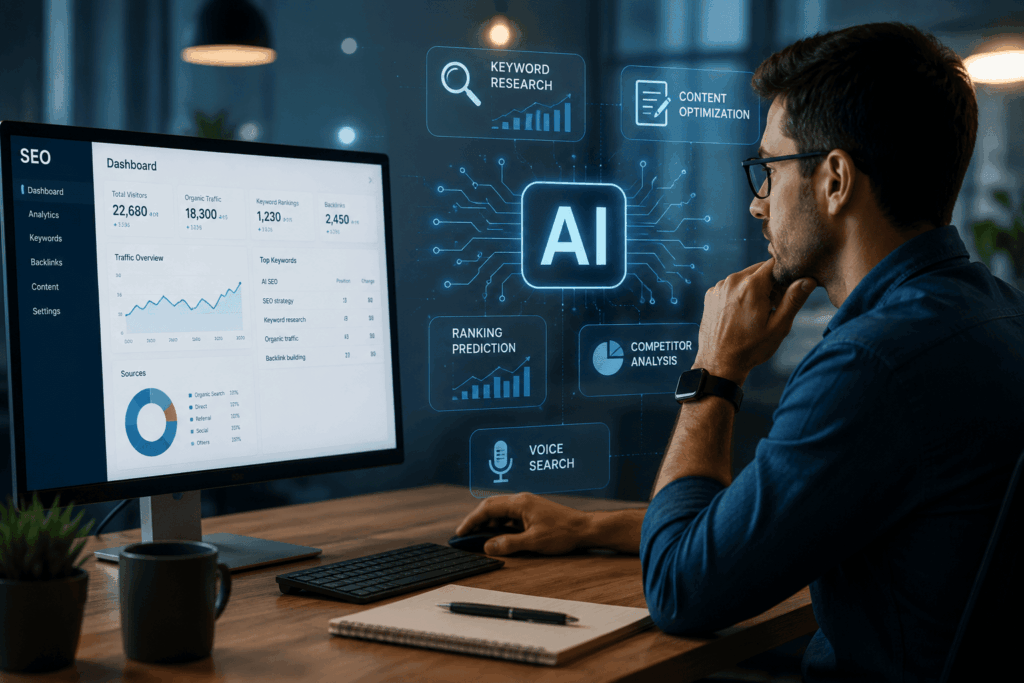
Artificial Intelligence (AI) is rapidly reshaping the way search engines understand, rank, and deliver content. What worked in traditional SEO a few years ago is no longer enough. Today, businesses must adapt to AI-driven algorithms, smarter search intent analysis, and evolving user behaviour to stay visible online.
For digital-first companies like Inforow Technologies, understanding this shift is essential to building future-ready SEO strategies that drive traffic, leads, and conversions.
The Rise of AI in SEO
Search engines like Google now rely heavily on AI models such as RankBrain, BERT, and MUM to interpret search queries. Instead of focusing only on keywords, these systems analyze:
- User intent
- Context of the query
- Content quality and depth
- Behavioral signals (clicks, dwell time, bounce rate)
This means SEO is no longer just about “keyword optimization”—it’s about answer optimization.
Key Ways AI Is Transforming SEO
1. Search Intent Over Keywords
Earlier SEO strategies focused on repeating keywords. Now, AI understands what users mean, not just what they type.
For example:
- Old SEO: “best digital marketing company in India”
- AI SEO: Understanding whether the user wants comparison, pricing, or services
What businesses should do:
- Create intent-based content (informational, navigational, transactional)
- Answer full questions clearly in blogs and landing pages
2. AI-Powered Content Ranking
Google’s AI evaluates content quality using signals like:
- Expertise (E-E-A-T: Experience, Expertise, Authoritativeness, Trustworthiness)
- Content structure and readability
- Topic depth and relevance
Thin or repetitive content is no longer effective.
What works now:
- Long-form, well-structured blogs
- Data-driven insights
- Original perspectives and case studies
3. Voice Search & Conversational Queries
With the rise of AI assistants like Siri, Alexa, and Google Assistant, search queries have become more conversational.
Instead of typing:
“SEO tips 2026”
Users now ask:
“What are the best SEO strategies for 2026?”
SEO impact:
- Focus on natural language content
- Use the FAQ sections
- Optimize for long-tail keywords
4. AI-Generated Search Results (SGE)
Google’s Search Generative Experience (SGE) uses AI to generate direct answers at the top of search results.
This reduces clicks on traditional listings and increases competition for visibility.
To stay visible:
- Provide clear, concise answers in your content
- Use structured data (schema markup)
- Focus on featured snippet optimization
5. Automation in SEO Tasks
AI tools now automate many SEO processes, such as:
- Keyword research
- Content optimization
- Technical SEO audits
- Competitor analysis
This allows businesses to focus more on strategy rather than manual work.
Popular AI-driven SEO tasks:
- Content gap analysis
- SERP analysis
- Predictive keyword trends
6. Smarter Link Building
AI tools help identify high-authority and relevant backlink opportunities by analyzing:
- Domain authority
- Relevance score
- Spam risk
This link-building is more strategic and less random.
Traditional SEO vs AI-Powered SEO
Aspect | Traditional SEO | AI-Driven SEO |
Focus | Keywords | User intent |
Content | Quantity | Quality & relevance |
Optimization | Manual | AI-assisted |
Ranking Signals | Backlinks + keywords | Behavior + context + engagement |
Search Results | Static listings | AI-generated summaries |
How Businesses Can Adapt to AI SEO?
To stay competitive in this evolving landscape, businesses must rethink their SEO approach.
1. Invest in High-Quality Content
- Create content that solves real problems, not just content that ranks.
2. Optimize for User Experience
- Fast-loading websites
- Mobile-first design
- Easy navigation
3. Use Structured Data
- Help search engines understand your content better with schema markup.
4. Focus on Topical Authority
- Instead of random blogs, build clusters of content around core topics.
5. Leverage AI Tools Wisely
- Use AI for insights—but keep human creativity for storytelling and strategy.
The Future of SEO in an AI World
SEO is not dying—it is evolving.
In the future, we can expect:
- More AI-generated search answers
- Hyper-personalized search results
- Greater importance of brand authority
- Increased role of multimedia content (video, images, interactive media)
Businesses that adapt early will dominate search visibility, while others risk becoming invisible online.
Final Thoughts
AI is fundamentally changing how SEO works—from keyword-based ranking to intelligent, intent-driven search experiences. Businesses must move beyond traditional SEO tactics and embrace smarter, AI-powered strategies.
Companies like Inforow Technologies are already aligning with this transformation by focusing on advanced digital strategies, performance-driven SEO, and future-ready content marketing approaches.
Contact Inforow Technologies for more details.