



Introduction
In today’s digital-first world, website speed is not just a technical factor—it is a business growth driver. A slow-loading website can hurt your Google rankings, reduce user engagement, and directly impact revenue.
For businesses like Inforow Technologies, where digital presence and performance matter, optimizing website speed is essential for long-term success.
Let’s explore how website speed influences SEO, user experience, and revenue in detail.
What Is Website Speed?
Website speed refers to how quickly a webpage loads and becomes fully interactive for users. It includes:
- Page load time
- Time to first byte (TTFB)
- First contentful paint (FCP)
- Overall page responsiveness
A faster website ensures users can access content without delay.
Why Website Speed Matters?
Key Impact Overview
Factor | Slow Website Impact | Fast Website Impact |
SEO Rankings | Lower visibility on Google | Higher search rankings |
User Experience | High bounce rate | Better engagement |
Conversion Rate | Drop in leads/sales | Increased conversions |
Brand Perception | Low trust | Professional credibility |
Revenue | Loss in potential income | Higher ROI |
How Website Speed Impacts SEO?
Google uses page speed as a ranking signal. A slow website struggles to compete in search results.
SEO Impact Breakdown
SEO Factor | Effect of Speed |
Core Web Vitals | Direct ranking factor |
Bounce Rate | Increases if slow |
Crawl Efficiency | Faster indexing for fast sites |
Mobile Ranking | Strong dependency on speed |
How Website Speed Improves User Experience (UX)?
User experience is one of the most important aspects of digital success.
1. Faster Load = Higher Engagement
Users expect websites to load in under 3 seconds. A fast website keeps users engaged and encourages them to explore more pages.
2. Smooth Navigation
Fast websites allow seamless scrolling, clicking, and interaction without lag.
3. Mobile Experience Enhancement
With mobile-first browsing, speed becomes even more critical. A fast mobile site improves usability and retention.
4. Builds Trust and Credibility
A slow website feels outdated and unreliable, while a fast site builds professional credibility
How Website Speed Impacts Revenue?
Website performance directly affects business conversions and sales.
1. Higher Conversion Rates
Even a 1-second delay in load time can reduce conversions significantly. Faster websites convert more visitors into leads and customers.
2. Lower Cart Abandonment (E-commerce)
Slow checkout pages lead to abandoned carts. Speed optimization ensures smooth purchasing experiences.
3. Increased Lead Generation
For service-based businesses, faster landing pages improve form submissions and inquiries.
4. Better ROI on Marketing Campaigns
Paid ads and SEO traffic perform better when landing pages load quickly—maximizing return on investment.
Common Causes of Slow Websites
Understanding the problem is the first step to fixing it:
- Heavy images and unoptimized media
- Poor hosting servers
- Excessive plugins or scripts
- Unminified CSS and JavaScript
- Lack of caching
- No CDN (Content Delivery Network)
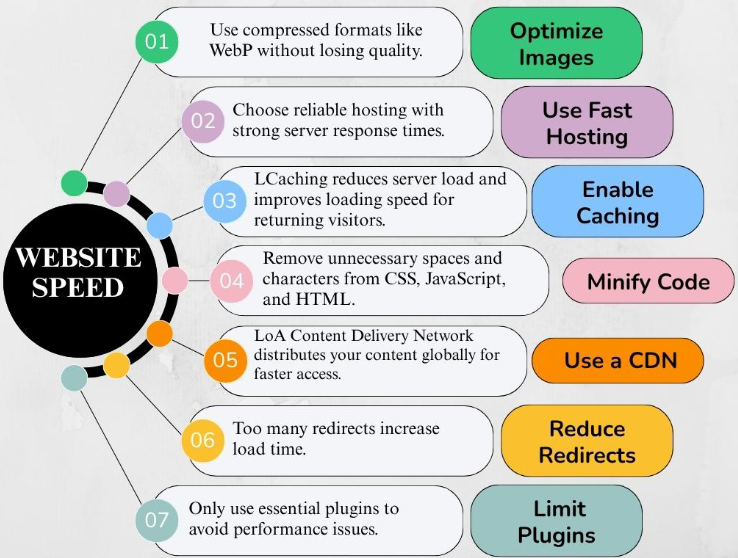
How to Improve Website Speed?
Here are proven strategies to optimize performance:
Why Website Speed Matters for Businesses Like Inforow Technologies?
For a digital solutions company like Inforow Technologies, website speed directly reflects:
- Technical expertise
- Brand credibility
- User trust
- Conversion performance
A high-performing website not only attracts visitors but also converts them into long-term clients.
Final Thoughts
Website speed is no longer optional—it is a critical factor for SEO success, user satisfaction, and revenue growth. A fast website improves search rankings, enhances user experience, and increases conversions.